The Principles of a Human-Centred Approach
A human-centred service begins with a person's actual goal, not a ready-made offer. Listening, discreet personal attention, informed choice, timely action and joined-up coordination help that person use their time well and stay in control of the decisions that matter.
What does a human-centred approach mean in service?
A human-centred approach means shaping the service around the recipient's purpose, daily circumstances and boundaries, while maintaining a reliable standard of delivery. It does not mean saying yes to every request. It means finding a suitable answer, explaining its limits and letting the person judge whether it fits.
I think of this as a way of working rather than a promise in a brochure. A beautiful property, an elegant welcome or an excellent vehicle may attract attention. None of them, by itself, tells me whether the person will be comfortable with the outcome. Before I recommend a solution, I want to understand what they are trying to achieve and what kind of experience they do not want. That knowledge changes what a good solution looks like.
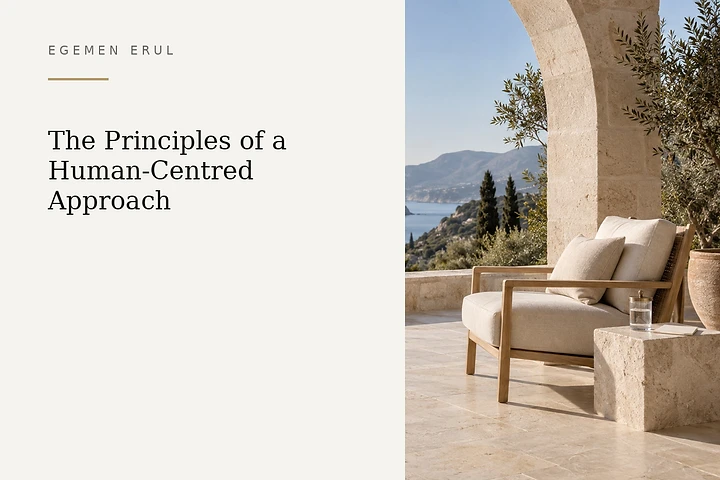
Consider a seat left ready on a quiet Mediterranean terrace. The useful detail is not the chair alone. It is whether the person has enough space to settle in, whether a covered glass of water is welcome, whether a note is helpful rather than intrusive, and whether the setting gives them privacy. Luxury, to my mind, is less about adding more things than arranging the right things so carefully that the person has room to breathe.
Where does understanding a person begin?
The first step is a question that goes beyond the name of a product. “Which property would you like?” is a reasonable opening, but it can make the next conversation about photographs and square metres. “What should your ordinary day feel like there?” opens up access, quiet, upkeep and the people who will actually use the space. The second question does not replace the first; it makes the answer more useful.
The same distinction appears in hospitality. A guest may ask for a luxury hotel when what they really want is an unhurried arrival and a private place to rest. Another may care about an efficient connection between a meeting, dinner and their return journey. Both requests can be called premium accommodation, yet they require different planning. I try to identify the intended outcome before choosing the impressive option.
Listening includes checking what I have understood. “Quiet” can mean no road noise, fewer people nearby, or time without interruption. If I decide which interpretation is correct without asking, I am presenting my own preference as someone else's. A short confirmation avoids that mistake. I separate the confirmed requirement from an observation and from an assumption that still needs testing.
Observation has its place, but it never gives me permission to decide on someone's behalf. A person who moves quickly past three options may be worried about time, price or something entirely different. Rather than diagnosing the reason, I can ask what part of the comparison matters most to them. The answer is their information, not my guess. This is a more respectful foundation for a tailored service.
It is also unnecessary to collect every detail of someone's private life. I ask for information that changes the service, say why it is needed and respect the scope they are willing to share. A preference recorded with permission can make a future encounter easier; sensitive information displayed on a welcome card or circulated to an unrelated provider can do the opposite. Trust depends on discretion as well as memory.
How can personal attention stay thoughtful?
Personal attention works when it is relevant and proportionate. If a guest has expressly said they prefer lemon water, having it ready can save a small conversation at an inconvenient moment. Repeated unsolicited messages or elaborate surprises may not be welcome at all. A gesture is not automatically considerate because it took effort; its value is measured by how well it fits the recipient.
I distinguish between the effort that should be visible and the effort that should remain backstage. A clear welcome note can establish warmth; the private preference behind it should not become a public display. Preparing a room well matters, but so does allowing a tired visitor to be left alone. When I can offer a choice about when and how to communicate, attention becomes a service rather than a demand for attention in return.
The right level of contact may change during a process. At the first enquiry, someone might prefer one concise message. Before signing an agreement or confirming a complex travel schedule, they may want a fuller explanation. I cannot treat one fixed “premium tone” as the answer to both situations. It is better to agree on preferred channels, reasonable contact times and the stages at which a decision needs explicit confirmation.
Some of the best care is a deliberate absence of interruption. The person feels that someone has anticipated the practical details, yet they do not have to praise the preparation or keep responding to it. This is a quieter form of prestige. It respects attention as a limited resource and gives the guest ownership of their time.
How is the final decision kept in the person's hands?
Professional judgement should narrow and clarify options, not take possession of the choice. I can identify what fits the person's stated purpose, explain why an alternative may be stronger and say what remains unknown. If I simply declare one option “best for you” without the reasoning and trade-offs, I have removed the person from a decision that belongs to them.
In property work, an attractive view is only one part of the discussion. Daily access, maintenance, the surrounding area and the steps still required in the transaction matter too. In a hotel choice, the quality of the room must be considered alongside arrival time, transport and the guest's reason for being there. A recommendation becomes meaningful when its practical consequences are visible, including the parts that do not favour the recommended choice.
I try to leave a decision conversation with four points clear: what the person gains, what they give up, which important information is still missing, and who will confirm the next step. This helps someone recognise whether the suggestion fits their own priorities. “The choice is yours” has little value if the explanation is incomplete; clarity is what makes choice usable.
Being honest about professional limits is part of this. I do not turn an unresolved legal condition or financial consequence into a confident service promise. A qualified professional should assess matters that require their expertise. I can coordinate the sequence and explain what needs confirmation, without pretending that coordination is a substitute for specialist advice.
Why do timing and coordination matter?
Good timing does not mean doing every action immediately. It means making the information available when the person can use it, confirming a material step before it becomes difficult to reverse, and ensuring the teams involved work from the same current plan. A beautifully arranged transfer at the wrong hour can leave someone stressed. A flawless hotel arrival cannot undo the uncertainty caused by an outdated itinerary.
In my planning, I ask who knows the latest details, who has authority to confirm a change and who needs to hear about it. A checklist can support that work; it cannot make stale information true. If the traveller's arrival changes, the driver, reception team and any connected booking need the updated timing within the authorised scope. The guest should not become the project manager of several suppliers for a journey someone else offered to coordinate.
Property decisions have their own sequence. A viewing, project information, offer, specialist review and eventual commitment should not be treated as unrelated events. If a material condition changes after an initial discussion, I would rather explain it before the next decision than rush ahead under the older description. One timely clarification can prevent several later corrections and protect trust.
Hospitality planning sometimes benefits from leaving a space empty. A calendar full of worthwhile restaurants and activities may be impressive on paper, but difficult to live through after a late flight. The guest's energy is part of the schedule. When a gap allows them to rest or make a spontaneous choice, doing less can be more valuable than coordinating another attraction.
What do these principles look like across services?
For property, I begin with the life the person wants to live, not an effort to persuade them to fit a particular development. I ask about regular access, who will use the place and what amount of upkeep feels reasonable. Then I can explain how several options compare. A person sees not just a compelling image but the everyday implications behind it. Unsuitable viewings can be ruled out earlier.
For accommodation, I begin with the guest's pace. One person wants activity; another wants a morning free of appointments. Sending both the same list is easy. Filtering the options for their arrival, transport and real priorities is the more useful work. The preparation should make the guest's decisions easier without removing their ability to change the plan.
For transport, the class of vehicle is only a component. The meeting point, luggage, journey duration, likely waiting and next engagement shape the experience. A traveller who knows where to go and whom to contact is more comfortable than one who is offered a superior vehicle but left guessing about the first step.
For concierge, a single request may depend on several providers. Coordinating their sequence keeps the person from repeating the same information to each of them. Still, I keep approvals visible: what is booked, what awaits confirmation and which information will be passed on. Joining up the work should not take control away from the person receiving it.
What does the recipient actually gain?
The benefit is not simply feeling “special”. A person can see relevant options sooner, eliminate unsuitable choices, use less time correcting avoidable mistakes and understand why each step is happening. Their preferences are considered without requiring them to retell a full history at every handover. Where a trade-off is inevitable, they can make it with open eyes.
No method guarantees that suppliers never make mistakes or plans never change. Human-centred delivery is especially important when something does change. The honest response is to explain the situation, set out realistic alternatives and keep the person's approval in the right place. Concealing a constraint to preserve an appearance of perfection is not a premium response.
For me, the principles are practical: listen before prescribing; verify what you observe; explain what is known and unknown; respect the person's privacy and time; and coordinate the pieces around their agreed goal. These habits can make a process calmer and a decision better informed. They are valuable only when they are applied consistently.
If you are weighing a property, a stay or a journey, begin by describing the kind of day and decision process you want, rather than naming a product alone. That conversation gives us a more accurate starting point. The goal is not the grandest proposal. It is an appropriate one that makes sense in your own life.
Frequently asked questions
Does human-centred service mean every request will be accepted?
No. It means understanding the purpose behind the request, offering suitable options and explaining real constraints such as availability, cost and timing.
Can personal attention be discreet?
Yes. Relevant preferences can be handled only with consent and on a need-to-know basis. Thoughtful preparation does not require displaying personal information.
Who makes the final decision after a professional recommendation?
The professional presents a reasoned comparison. The person affected by the choice retains approval over their own commitments and preferences.
Is good timing the same as instant service?
No. It means the right information, confirmation and action occur in a useful sequence; delays or limits should be communicated early.
What if several providers are involved?
A coordinator should clarify who is responsible for updates and approvals, so the recipient is not asked to repeat the same instruction across teams.
Sources and ideas consulted
This article does not speak on behalf of any institution. The works below were consulted to test and deepen the ideas synthesised in the text. Each entry explains how the source informed the article.
- UK Government Digital Service, Service Standard. This public-service guide discusses understanding user needs, considering the whole problem and joining up experiences across channels. My application to property and premium hospitality is a professional interpretation, not a rule laid down by that guide for these sectors.